

Mental Kemerdekaan in the Age of Algorithms: Reclaiming Indonesia’s Intellectual Sovereignty
In the shadow of Gunung Merapi—where the great Romo Mangun once wrestled with the eternal tension between ancestral wisdom and modern complexity—Indonesia now stands at one of the most critical intellectual crossroads since its independence. The volcano still breathes, but the voices of our moral and philosophical giants have grown faint. The world has shifted. And so must we.
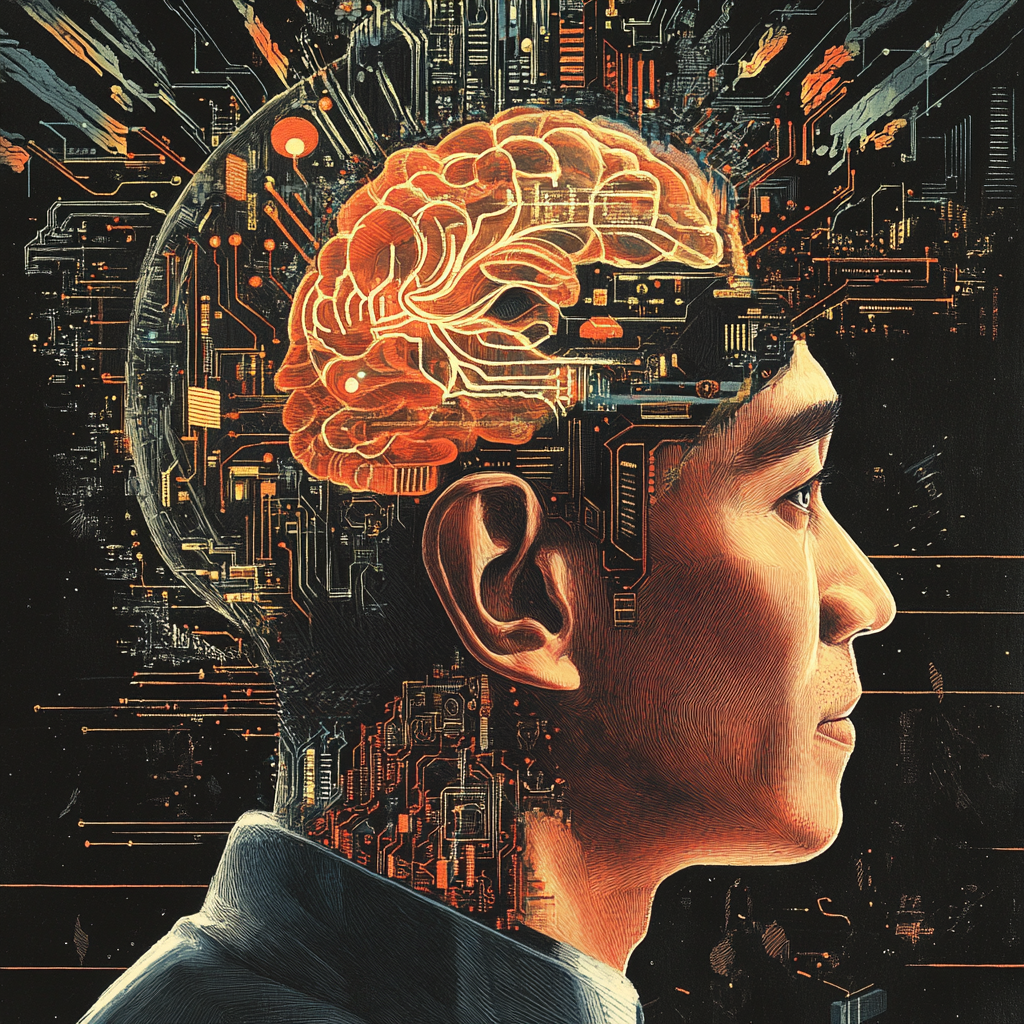
Today, artificial intelligence redraws the architecture of power: reorganizing economies, distorting narratives, and redefining what it means to be human. In this transformation, Indonesia is not just a participant—it is a battleground for sovereignty of the mind. The challenge before us is not simply about adopting technology. It is about awakening a higher form of literacy: the ability to think critically, philosophically, and humanely in a world shaped by code.
We must go beyond digital inclusion. What we urgently need is mental kemerdekaan—a deep and conscious liberation of thought. Not just freedom from colonial narratives, but freedom from intellectual passivity. Not just absorbing the world’s knowledge, but interpreting it, reimagining it, contributing to it.
I was fortunate to grow up under the canopy of minds like Romo Mangun—men and women whose intellects radiated from libraries, riverbanks, and classrooms. They taught us to be critical, but also compassionate. Rooted, yet imaginative. They believed Indonesia’s future was not just in steel and roads, but in ideas. What happens now that the giants have departed—and we find ourselves in conversation with neural networks, language models, and synthetic minds?
This is no time for nostalgia. This is a call to arms. To reclaim Indonesia’s intellectual destiny in an age of intelligent machines, we must cultivate a new generation of thinkers, architects of ideas who are as fluent in philosophy as they are in programming. AI must not replace our intellect; it must amplify our imagination.
Indonesia’s future depends not on how many tools we adopt—but on how deeply we remember who we are, and how courageously we design what we must become.
Beyond the Colonial Shadow
The colonial experience left deep impressions on Indonesian consciousness, some still lingering in subtle assumptions about whose knowledge matters and who possesses the capacity to innovate. This psychological inheritance manifests in what might be termed an “intellectual diffidence”—a hesitation to assert indigenous frameworks of understanding or to position Indonesian thought as globally significant. Yet the nation that produced minds like Sutan Sjahrir, Pramoedya Ananta Toer, and Romo Mangunwijaya possesses profound intellectual resources that remain underutilized in confronting contemporary challenges.
The hard truth is that intellectual colonialism remains a present danger. When societies accept that innovation flows exclusively from established centers of technological power—Silicon Valley, Beijing, or Tokyo—they unwittingly consign themselves to perpetual followership. For Indonesia to truly claim its place in the AI era requires challenging this arrangement at its foundation: not merely learning to code but determining what values that code embodies.
The Archipelagic Advantage
Indonesia’s geographical reality as an archipelago of extraordinary diversity offers a unique intellectual vantage point. Where monolithic technological systems often reflect singular cultural assumptions, Indonesia’s lived experience of negotiating unity amid diversity (Bhinneka Tunggal Ika) provides a sophisticated framework for more pluralistic approaches to AI development.
Consider how Indonesia’s traditional knowledge systems have evolved to address uniquely archipelagic challenges: navigating complex maritime spaces, sustaining biodiversity across distinctive ecological zones, and developing governance systems that accommodate profound cultural differences. These represent epistemological achievements of the highest order—indigenous ways of knowing that could profoundly inform more adaptive, context-sensitive technological development.
The principle of gotong royong (communal work and reciprocity) stands in stark contrast to individualistic assumptions embedded in many AI systems developed in Western contexts. What might an AI framework look like if it prioritized communal wellbeing over individual optimization? Indonesia’s cultural wisdom offers these alternative paradigms precisely when technological homogenization threatens global intellectual diversity.
From Digital Consumers to Creators
Indonesia’s digital marketplace grows impressively, yet this consumer enthusiasm must transform into creative capacity. The emergence of unicorn startups like Gojek, Tokopedia, and Traveloka demonstrates Indonesia’s potential to develop solutions attuned to local contexts. However, truly transformative innovation requires more than entrepreneurial spirit—it demands intellectual confidence to fundamentally reimagine technological possibilities.
Young Indonesians must recognize that the AI era isn’t merely about learning to use new applications but about believing they can build, improve, and redefine these technologies. This requires the confidence to question, experiment, and lead rather than follow. If Indonesia approaches AI with a “second-class” mindset, it will only ever implement tools designed elsewhere, solving problems defined by others, according to values established by others. This would betray the nation’s immense potential.
Building Intellectual Infrastructure
Developing intellectual sovereignty requires systematic investment in knowledge ecosystems. This means establishing interdisciplinary education programs that connect computer science with humanities, social sciences, and cultural studies. It means creating technology incubators focused on developing AI solutions for Indonesia’s distinctive geographical and social contexts. It demands supporting public forums where technologists engage meaningfully with communities about the impact of new technologies.
Most fundamentally, it requires fostering critical technology literacy that empowers citizens to evaluate technological developments against Indonesian values and interests. When ordinary Indonesians can articulate what they want from technology—rather than simply accepting what is offered—the nation becomes an active participant in shaping the digital future.
The Courage to Think Independently
True intellectual sovereignty ultimately requires courage—the willingness to advance perspectives that may challenge established technological orthodoxies. This doesn’t mean rejecting global knowledge but engaging with it critically from a position of cultural confidence. Just as Indonesia’s independence movement synthesized global democratic principles with indigenous aspirations, today’s intellectual pioneers must create distinctive technological approaches that honor Indonesia’s unique journey.
The nation’s religious and philosophical traditions contain sophisticated understandings of human flourishing that can inform more humane technological design. Its historical experience navigating between tradition and modernity offers valuable insights for creating technologies that respect cultural continuity. These perspectives represent Indonesia’s potential intellectual contribution to global technological development.
Conclusion: The Imperative of Mental Kemerdekaan
As Indonesia stands at this critical juncture, embracing intellectual sovereignty isn’t merely desirable—it’s essential for meaningful participation in the emerging world order. Just as political independence required throwing off colonial constraints, thriving in the AI era demands liberating Indonesian minds from any lingering sense of intellectual inferiority.
The challenge for Indonesia’s leaders is to champion a narrative of the nation as creator and innovator, not just adopter. For educators, it means nurturing critical thinking alongside technical skills. For young Indonesians, it requires the audacity to believe their intellectual contributions matter globally.
Indonesia need not merely avoid being left behind in the AI era—it can make distinctive, valuable contributions to how humanity navigates this profound technological transition. The path begins with mental kemerdekaan: the freedom to think, create, and lead from a position of intellectual sovereignty.
 Kaizeneers
Leave a comment