

Scroll, scroll, tap. Another day, another digital drama lighting up our timelines here in Indonesia. You know the script by now, right? A controversial meme or online comment – maybe from a bright student at a top university like ITB, maybe from anyone with a keyboard and an opinion – sparks a wildfire of outrage. Officialdom swoops in, sometimes with the heavy tread of the ITE Law. Then comes the almost ritualistic “minta maaf” (apology), a flurry )of media soundbites, and… then what? We wait for the next episode. Rinse, repeat.
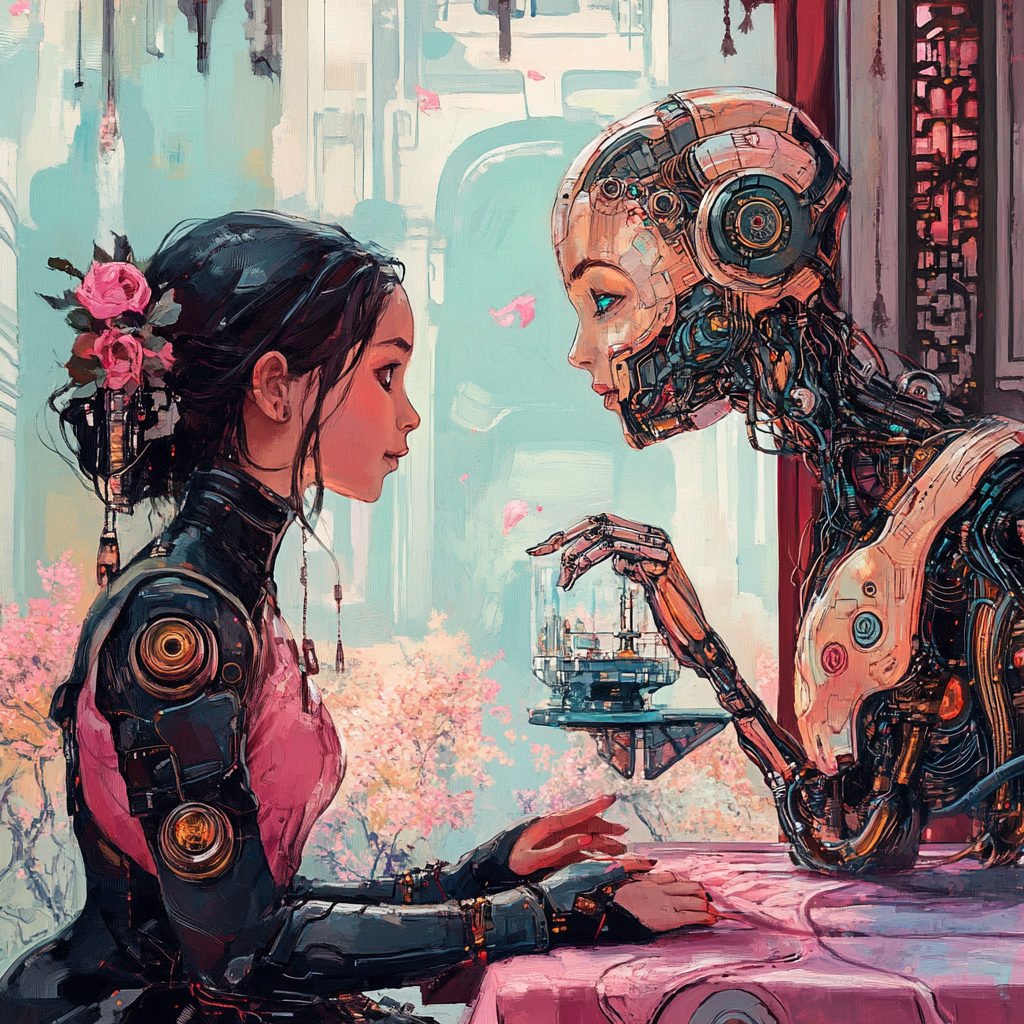
Honestly? “Nggak lucu, ah!”
And by “nggak lucu,” I’m not even talking u about whether the original meme was a comedic masterpiece or a cringeworthy flop. No, the truly “nggak lucu” part is the whole circus. It’s that feeling when you see someone, or even a whole system, doing something in a weird way they think is justified, clever, or perhaps even a bit “funny” in its own dramatic way, but for the rest of us watching? It’s just… not. It’s a massive, headline-grabbing distraction. This whole reactive cycle, this national pastime of digital “gelut” (brawling), feels like a colossal misdirection of our incredible Indonesian energy and intellect, a symptom of not channeling our collective brilliance towards contributions that truly matter on a grander scale – like leading the charge in sophisticated and ethical Artificial Intelligence.
“Minta Maaf” Isn’t a Strategy, It’s a Full Stop (That Goes Nowhere)
Let’s be real: the “minta maaf” often feels less like a genuine turning point and more like a societal full stop designed to make the discomfort go away quickly. But what happens after the apology is tearfully accepted or legally noted? Does it spark a nationwide seminar on digital ethics? Does it lead to a clearer understanding of the often-blurry lines drawn by the ITE Law? Mostly, not really. The same ambiguities persist, the same potential for disproportionate reactions looms, and the same online behaviors often resurface a few news cycles later with different characters playing similar roles.
Think about the sheer national energy poured into these episodes! Hours of heated public discourse, valuable police and judicial resources, media outlets in a frenzy. Is this truly the best use of our nation’s bandwidth? It’s like being stuck in a never-ending group chat argument while your house is on fire. The ITE Law itself, often cited in these cases, becomes part of this “nggak lucu” drama – a well-intentioned tool perhaps, but one whose vague “rubber articles” (“pasal karet”) can sometimes stifle legitimate expression or be applied in ways that feel more about silencing than about fostering genuinely mature and responsible digital citizenship. It’s absurd to think this cycle of outrage-reaction-apology is a productive, let alone sophisticated, way for a dynamic nation to navigate the complexities of digital expression in the 21st century. It’s tiring, and frankly, “nggak lucu, ah!”
(The Real Joke? Missing Indonesia’s Golden Opportunity in AI ~300 words)
And here’s the kicker, the part that really makes this whole situation “nggak lucu” in the tragicomic sense: while we’re tangled in these digital “sinetron” (soap operas), the rest of the world isn’t waiting. The global AI race is on, full throttle. Nations like Russia, China, and India – countries we often look to for various benchmarks – are making massive, strategic national pushes to dominate this transformative technology. They’re not just talking; they’re building.
Indonesia, to its credit, isn’t entirely asleep at the wheel. We have our “Strategi Nasional Kecerdasan Artifisial Indonesia 2020-2045” (National AI Strategy). It’s a document filled with noble goals: AI for better healthcare, for reforming our bureaucracy (imagine AI that actually makes getting a KTP faster!), for revolutionizing education, for ensuring food security across our thousands of islands. It’s a vision of an Indonesia leveraging AI for genuine progress.
But then you see public attention, sometimes even state resources, getting massively diverted by these meme-level dramas, and the contrast is jarringly “nggak lucu.” We have a national strategy aspiring to AI leadership, yet our digital public square often seems more adept at generating viral controversies than groundbreaking algorithms. Where is our brightest Indonesian talent – those brilliant minds from ITB, UI, UGM, and countless other institutions – being channeled? Is their sharp intellect, their creative fire, best used crafting the next meme that might land them in hot water, or designing AI solutions that could solve some of Indonesia’s most pressing challenges? It makes you wonder, what would global powerhouses like BTS think of this? They, with their message of hard work, purpose, and global impact (“Love Myself, Speak Yourself”), would probably just shake their heads, say “Move on, work harder,” and get back to conquering the world with their sophisticated artistry.
Why “Nggak Lucu Memes” Are the Opposite of Sophisticated
The kind of national energy consumed by a “nggak lucu meme” incident and its chaotic handling is the antithesis of what’s needed to build sophisticated AI. True AI sophistication isn’t just about complex code or how many teraflops your supercomputer can crunch. It’s far deeper. A sophisticated AI, the kind Indonesia should be aspiring to build, is:
- Ethically Grounded: It’s built from the ground up with principles of fairness, transparency, and accountability. This isn’t a fluffy add-on; it’s the “scientific” bedrock of responsible AI, as outlined by global bodies like the OECD and UNESCO (with whom Indonesia is actively engaging on AI ethics). An AI that perpetuates hoaxes or amplifies bias isn’t sophisticated; it’s a digital menace.
- Solves Real Problems: Sophisticated AI addresses tangible Indonesian needs. Imagine AI optimizing our agricultural supply chains to reduce food waste, AI powering early warning systems for tsunamis and earthquakes across our vulnerable archipelago, AI helping to preserve and teach our 700+ local languages, or AI personalizing education for students from Sabang to Merauke.
- Human-Centric: It’s designed to empower Indonesians, to augment our abilities, to improve our quality of life, not to create new divisions, ethical nightmares, or digital dependencies.
A “nggak lucu meme” incident, and the often unsophisticated way it’s handled, represents a failure of mature engagement with complex digital issues. We absolutely cannot afford that same lack of sophistication when dealing with AI. An AI developed in an ethical vacuum, or deployed carelessly, becomes the ultimate “nggak lucu” technology – a tool that its creators might have thought was clever or innovative, but which ends up having harmful, absurd, or cringeworthy societal impacts. That’s not innovation; that’s an accident waiting to happen.
Conclusion: Let’s Get Serious – Our AI Future is “Nggak Main-Main” (Not for Playing Around)
So, yes, the cycle of meme dramas and the all-too-predictable “minta maaf” resolutions is, at its core, “nggak lucu, ah!” It’s a tragicomedy of wasted potential, a diversion of precious national energy from the tasks that truly matter for Indonesia’s future.
This isn’t just a call to “behave better online.” It’s a passionate plea to Indonesian talent, to our policymakers, to our educators, and to the public at large: let’s shift our collective focus. Let’s channel the incredible creativity, the sharp intellect, the vibrant spirit of this nation into something that will make the world sit up and take notice for all the rightreasons. Let’s build an AI ecosystem that is not only technically advanced but also ethically sound, a testament to Indonesian ingenuity and wisdom.
What will be Indonesia’s next big global headline? Will it be another “nggak lucu” meme drama that makes international observers scratch their heads? Or will it be a breakthrough in sophisticated, ethical AI that shows the world how a diverse, dynamic nation can lead in the age of artificial intelligence? The choice, and the hard work, is ours. Our AI future is “nggak main-main.” It’s time to get serious.
 Kaizeneers
Leave a comment