
Indonesia, a nation undergoing dynamic transformation and fortunate to have President Prabowo Subianto at the helm, a leader dedicated to improving the lives of its people and guiding the country towards a brighter future, stands at a pivotal moment. This journey of progress, however, is rarely a smooth, uninterrupted path. It’s a complex and challenging process that requires open dialogue, robust debate, and a willingness to embrace constructive conflict.
While acknowledging the deep respect and affection many Indonesians hold for their leaders, it’s crucial to recognize that a healthy society, and indeed a healthy government, thrives on the exchange of ideas, even when those ideas challenge the status quo. This isn’t about disrespect or rebellion; it’s about recognizing that diverse perspectives are essential for growth and that the pursuit of excellence often requires challenging assumptions and questioning established norms.
The Art of Disagreement: Cultivating Respectful Dialogue
In Indonesia, where politeness (kesopanan) and social harmony are deeply valued, the very concept of “disagreement” can sometimes feel uncomfortable. There’s a tendency to prioritize consensus and avoid direct confrontation. However, it’s crucial to differentiate between destructive conflict, characterized by personal attacks, inflammatory rhetoric, and ad hominem arguments, and constructive conflict, which focuses on ideas, policies, and solutions.
The art of disagreement lies in cultivating respectful dialogue. This means focusing on the issue at hand, presenting arguments with evidence, logic, and reasoned analysis, actively listening to opposing viewpoints, and rigorously avoiding personal attacks or emotional appeals that distract from the core issue. It’s about disagreeing without being disagreeable, remembering that the ultimate goal is not to “win” an argument or assert dominance, but to collaboratively arrive at the best possible outcome for the nation and its people.
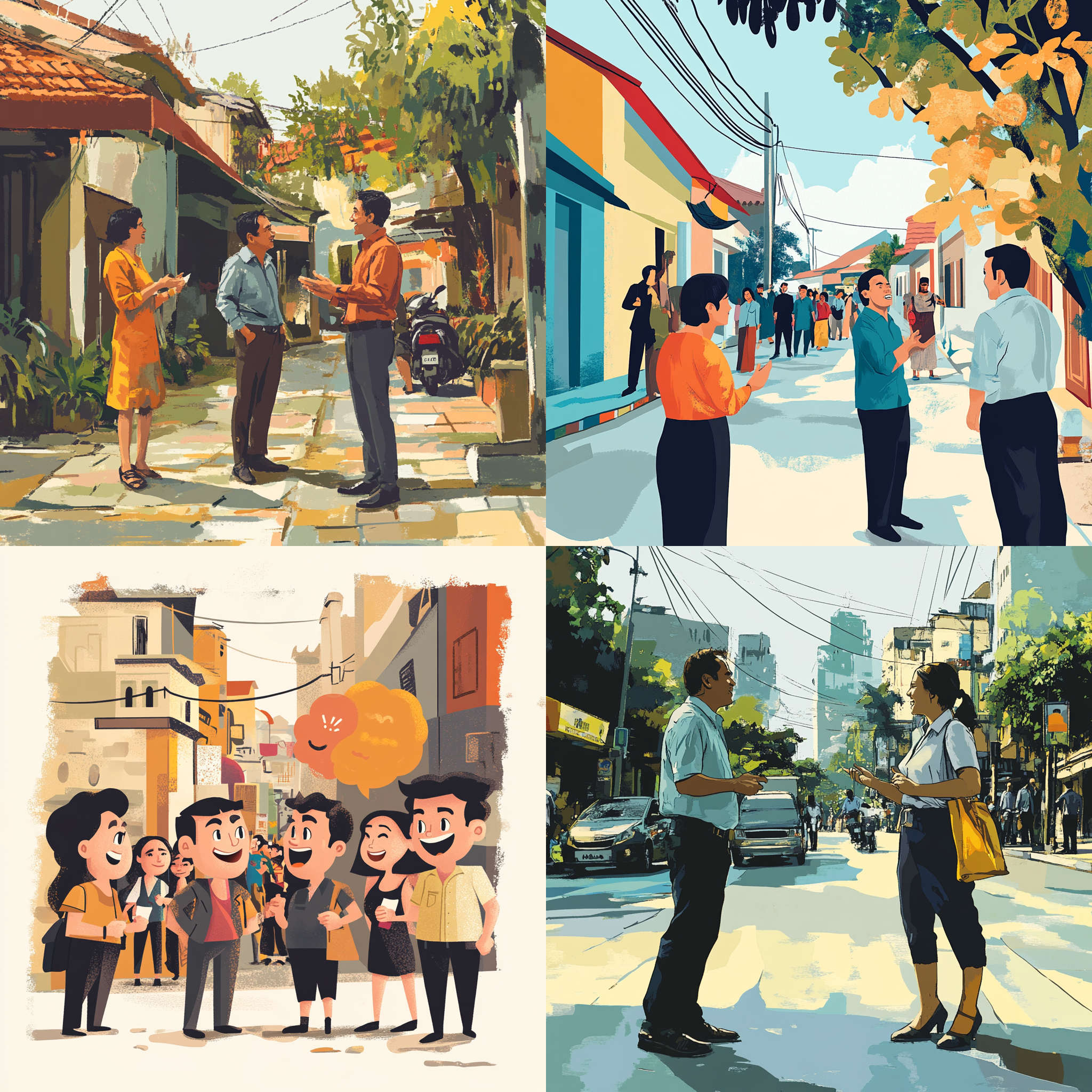
Think of it like a lively discussion at a warung kopi, that quintessential Indonesian space for social interaction. There can be passionate disagreements, robust exchanges, and even a bit of guyonan (banter), but they are often conducted with a sense of camaraderie, shared purpose, and underlying respect. This spirit of healthy debate, applied to national issues, can be a powerful force for progress, fostering innovation and leading to more effective policy outcomes.
- Humor/Current Issue Angle:
- Imagine a political debate where everyone just politely nods in agreement, saying “setuju, setuju” (agree, agree) to everything. How boring and unproductive would that be? A little bit of “bumbu” (spice) in the discussion is necessary, as long as it’s the right kind of spice – the spice of reasoned debate, not the heat of personal attacks!
Challenging the Echo Chamber: The Importance of Diverse Perspectives
“Groupthink,” the phenomenon where a group of people prioritize consensus, conformity, and maintaining harmony over critical thinking, can be a serious and insidious danger in any organization, including government. When everyone thinks alike, voices dissenting opinions are suppressed (or self-censored), and alternative viewpoints are dismissed, flawed decisions are far more likely to be made, leading to ineffective policies and potentially harmful outcomes.
To avoid this pitfall, it’s essential to actively seek out diverse perspectives. This means engaging with people from different backgrounds, with different experiences, and with different viewpoints – from academics and experts to activists and ordinary citizens. It’s about challenging assumptions, considering alternative solutions, and being willing to have one’s own ideas and biases questioned. It’s about consciously breaking out of the “echo chamber” and embracing the richness of diverse thought.
Think of it like a musical ensemble. A choir with only one voice, no matter how beautiful, will never be as rich, complex, and compelling as one that incorporates a wide range of harmonies, timbres, and vocal styles. The same principle applies to governance: a nation that embraces diversity of thought will be far more dynamic, innovative, and effective.
- References:
- “Challenging the Echo Chamber: The Importance of Diverse Perspectives” – Cass Sunstein
- Humor/Current Issue Angle:
- Imagine a government that only listens to itself. It’s like a person talking to their own reflection in the mirror – you might hear what you want to hear, and you might feel validated, but you won’t learn anything new, and you’ll certainly be unable to grow!
Dissent as a Duty: Constructive Criticism as a Form of Civic Engagement
In some cultures, including Indonesia, there can be a strong emphasis on maintaining social harmony and avoiding direct confrontation. While this emphasis on politeness and respect is admirable, it’s crucial to recognize that constructive criticism is not disloyalty or disrespect; it’s a vital form of civic engagement, a way of showing that one cares deeply about the well-being of the nation and wants to contribute to its improvement.
Citizens who offer thoughtful, well-intentioned, and evidence-based criticism of government policies are not enemies of the state; they are stakeholders, partners in the process of building a better future for all. Their voices should be valued, heard, and engaged with, not dismissed, silenced, or demonized.
Think of it like a family. When a family member points out a problem, suggests a better way, or offers a different perspective, it’s not because they hate the family, but because they love it and want to help make things better for everyone. The same principle applies to citizens offering constructive criticism to their government.
- References:
- “Dissent as a Public Duty” – Noam Chomsky
- Humor/Current Issue Angle:
- Imagine if everyone just said “yes, Pak!” to everything the government did. We’d end up with some pretty strange and potentially disastrous policies! A little bit of constructive “no, tunggu dulu” (wait a minute) can be a very good thing, a necessary check and balance for effective governance.
Learning from Opposition: The Value of Different Viewpoints
Even when opposition voices are critical, challenging, or seemingly adversarial, they often offer valuable insights, alternative perspectives, and identify potential pitfalls that can help the government make more informed, effective, and well-rounded decisions. Dismissing or silencing opposition is a missed opportunity for growth, a failure to learn from different viewpoints, and a recipe for policy blind spots.
Engaging with opposition doesn’t mean agreeing with everything they say, or adopting every suggestion, but it does mean actively listening, carefully considering their arguments, and being willing to find common ground and compromise. It’s about recognizing that different viewpoints can enrich the policy-making process, leading to better outcomes for the nation.
Think of it like a debate team. The best and most successful teams are the ones that can anticipate and effectively address opposing arguments, strengthening their own position through rigorous analysis and consideration of alternative perspectives. The government should adopt the same approach, engaging with different viewpoints to strengthen its own policies and enhance its effectiveness.
- References:
- “Deliberative Democracy” – Jurgen Habermas
- Humor/Current Issue Angle:
- Imagine a government that only listens to its own supporters, patting themselves on the back and ignoring any dissenting voices. It’s like a football team that only practices with itself, congratulating each other on their “brilliance” – they’ll never get any better, and they’ll likely be crushed when they face real competition!
“We Don’t Have All the Answers”: Embracing Open-Mindedness in Governance
Ultimately, effective governance is characterized by open-mindedness, intellectual humility, and a genuine willingness to consider alternative viewpoints. It’s about recognizing that no single individual or group has a monopoly on wisdom or the best solutions, that different perspectives can offer invaluable insights, and that the best policies often emerge from collaboration, dialogue, and a synthesis of diverse ideas.
This requires a deep commitment to listening, learning, and adapting, to being open to new ideas, challenging preconceived notions, and acknowledging that there is always room for improvement, regardless of how well-intentioned or seemingly successful current policies may be. It’s about embracing a growth mindset, recognizing that progress is a continuous journey, not a static destination, and that the best governments are those that are always striving to learn, adapt, and improve, guided by the best interests of the nation and the voices of the people they serve.
Think of it like a scientist conducting a complex experiment. They are always open to new data, willing to revise their hypotheses based on evidence, and constantly seeking to improve their understanding of the world. The government should adopt the same scientific approach to governance, embracing evidence, seeking out diverse perspectives, and constantly refining its approach based on feedback and analysis.
- References:
- “Thinking, Fast and Slow” – Daniel Kahneman
- Humor/Current Issue Angle:
- Imagine a government that declares, “We’ve got it all figured out! No need for your input, no need for your questions, no need for your suggestions!” That’s not a model for effective governance; it’s a comedy sketch, a recipe for disaster, and a surefire way to miss out on some brilliant ideas and make some easily avoidable mistakes.
By embracing these principles, Indonesia can cultivate a political culture that values healthy debate, constructive criticism, and open-mindedness. This will not only lead to more effective governance and better policies but also foster a stronger, more united, and ultimately more prosperous nation, one that is truly responsive to the needs and aspirations of all its citizens. President Prabowo and his team have a unique opportunity to champion this approach, leading by example and building a “Nusantara 2.0” where diverse voices are heard, respected, valued, and ultimately, contribute to the collective good.
References:
- Tannen, D. (1998). The Argument Culture: Moving from Debate to Dialogue. Ballantine Books.
- Patterson, K., Grenny, J., McMillan, R., & Switzler, A. (2011). Crucial Conversations: Tools for Talking When Stakes Are High (2nd ed.). McGraw-Hill Education.
- Mitchell, S. (2014). On Conflict. Vintage.
- Sunstein, C. R. (2018). Challenging the Echo Chamber: Why Disagreeing Well Is So Important. Oxford University Press.
- Habermas, J. (1996). Between Facts and Norms: Contributions to a Discourse Theory of Law and Democracy. MIT Press.
- Kahneman, D. (2011). Thinking, Fast and Slow. Farrar, Straus and Giroux.
- World Bank. (2017). Open Government: Reforming Public Service Delivery. World Bank Publications.
Sources and related content
 Kaizeneers
Leave a comment