
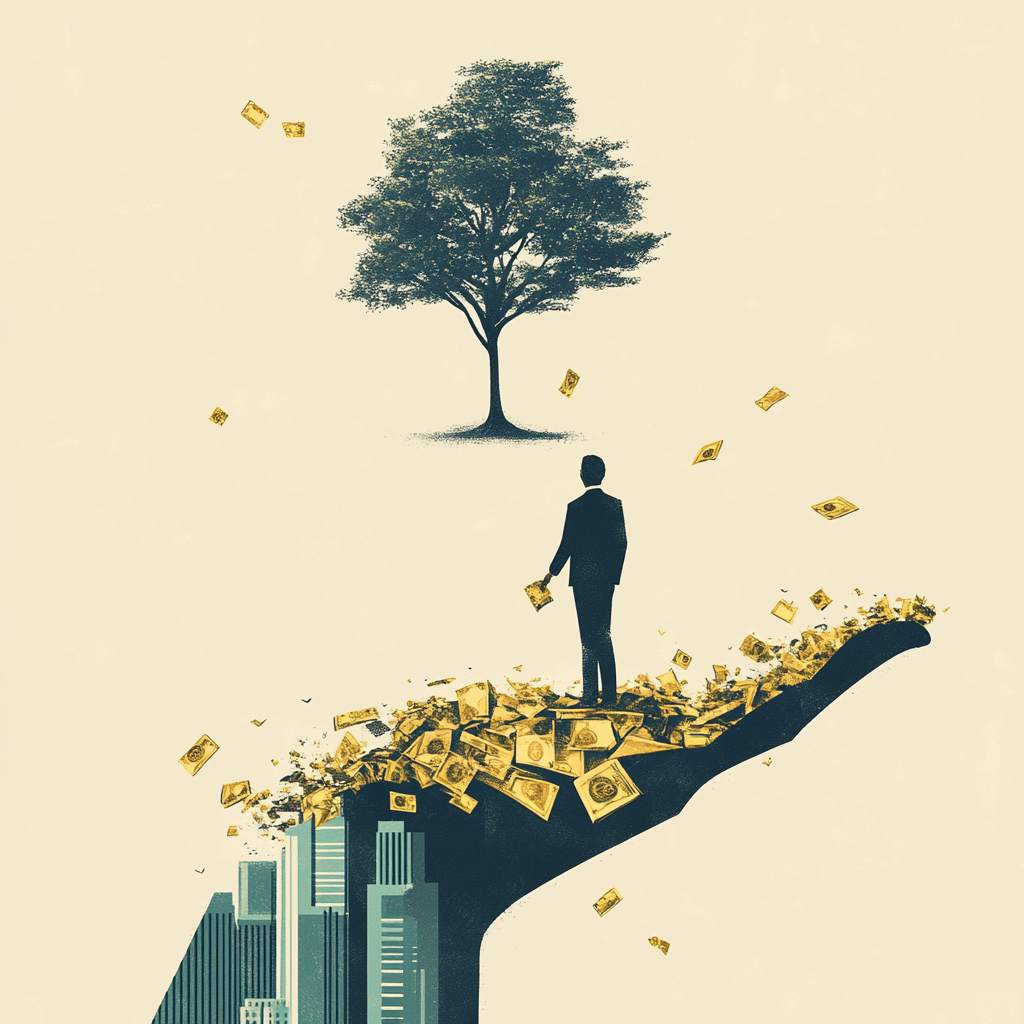
“Frugality isn’t about what you give up — it’s about what you gain: clarity, power, and freedom.”
What if true wealth isn’t about how much you spend, but how wisely you master your resources? In a world obsessed with consumerism and the endless pursuit of “more,” the frugal lifestyle stands not as a sacrifice, but as a bold, empowering strategy — one that builds resilience, amplifies leadership, and secures generational wealth.
Leaders today face daunting challenges — economic uncertainty, growing social inequality, environmental crises, and the unpredictable tides of global markets. Indonesia’s capital shift to Nusantara, America’s economic cycles, and rising global debt all signal the same hard truth: the age of excess is unsustainable.
And yet, within this challenge lies an opportunity — the chance to rediscover frugality, not as a fallback during hardship, but as a forward-thinking leadership principle. Frugality is intelligent prioritization. It is mastering the art of doing more with less. It is building strength from the inside out — a quiet, unstoppable power that redefines wealth itself.
Around the world, the paradox is undeniable. Global debt reached a staggering $307 trillion in 2023, according to the World Bank. Personal debts climb, national budgets stretch thin, and yet, consumption continues to rise. Indonesia faces record-high credit usage, while American households wrestle with student loans, medical bills, and rising living costs.
Culturally, we are conditioned to equate spending with success. Social media flaunts the luxury lifestyle, fast fashion booms, and financial fragility grows behind the scenes. Yet, beneath this façade lies growing anxiety, burnout, and a dangerous erosion of resilience — for individuals, families, and nations alike.
For leaders, the cost of this mindset is profound. Consumption-driven leadership weakens resilience, creates dependencies, and compromises future prosperity. When national policies mirror these unsustainable habits, the result is economic fragility and social unrest.
It is time to reframe frugality — from something imposed during crises to a conscious strategy that shapes powerful leadership. Visionary leaders understand that frugality forces clarity, discipline, and innovation. It sharpens decision-making, reduces waste, and builds long-term strength.
Harvard’s Clayton Christensen warned of resource misallocation — how overfunded giants often fail while lean, focused startups thrive. The same holds true for governments, businesses, and households. Frugality compels leaders to ask hard questions, prioritize ruthlessly, and create value rather than simply consume.
The framework of Essentialism, as articulated by Greg McKeown, is one such leadership philosophy. It is the disciplined pursuit of “less but better.” Leaders who practice essentialism focus energy where it matters most — eliminating distractions, cutting waste, and achieving sustainable impact.
Similarly, Japan’s Shokunin philosophy champions mastery, simplicity, and profound respect for resources. These values turned Japan into a global model of efficiency, quality, and innovation. True leadership understands that simplicity is not weakness — it is strength.
Across the globe, powerful case studies demonstrate the transformative power of frugality:
In Indonesia, the Desa Mandiri (Independent Village) program empowered local villages to manage their own resources and budgets. The result? Reduced corruption, improved services, and stronger local economies — all driven by lean, focused governance.
In America, the growing FIRE movement (Financial Independence, Retire Early) offers another model. Thousands of young professionals save 50-70% of their income, invest strategically, and exit the rat race decades early. Their rebellion against debt-fueled lifestyles redefines the American Dream — proving that frugality is the gateway to freedom, not limitation.
Globally, Toyota’s lean manufacturing system stands as a masterclass in frugality. By eliminating waste and focusing on continuous improvement, Toyota transformed from a small carmaker to an industry giant. Their success wasn’t built on excess but on discipline and the relentless pursuit of efficiency.
So, how can today’s leaders, families, and entrepreneurs harness this frugal power?
Adopt the Zero-Based Budget Mindset. Start from zero every time — whether planning a family budget, launching a business initiative, or crafting national policies. Question every expense: Is it necessary? Does it align with our mission? This mindset prevents bloated systems and waste.
Invest in assets, not appearances. Redirect resources toward education, health, renewable energy, and ownership. Avoid spending on fleeting status symbols. True power is built silently, compounding over time.
Build community wealth models. Support cooperatives, micro-financing, and local initiatives that empower people. Indonesia’s koperasi system remains a shining example of community-driven prosperity.
Master minimalist communication. Speak less but say more. Leaders must simplify — cutting unnecessary meetings, convoluted policies, and empty rhetoric. Clarity inspires action.
Practice digital frugality. Ruthlessly curate your digital world. Limit notifications, reduce screen time, and focus only on tools that serve your mission. In the age of information overload, attention is the ultimate currency.
Frugality is not just strategic — it is philosophical. It forces us to confront our deepest fears and desires. Who are we without the symbols of wealth? Without the applause of excess?
The answer is liberating. You become a leader who operates from strength, not need. A creator of systems, not a consumer of them. As Seneca once said, “Wealth consists not in having great possessions, but in having few wants.”
Frugality, when practiced ethically, elevates both the leader and the community. Yet, misconceptions persist. Some see frugality as stinginess or lack of ambition. Worse, unethical leaders weaponize “austerity” to justify oppression or hoard power. But frugality is not exploitation — it is wisdom. It is the art of choosing long-term strength over short-term applause.
Leaders must also remember that frugality does not mean sacrificing quality. It means choosing lasting value over fleeting trends — building systems, products, and communities that endure.
Today, Indonesia, America, and the global community stand at a crossroads. Do we continue down the path of endless consumption, debt, and fragility? Or do we choose the frugal path — strategic, sustainable, and empowering?
True leadership calls for the latter. Frugality frees up resources to invest in what truly matters: education, health, innovation, and resilience. It builds a society where success is measured not by what we spend, but by what we create, protect, and sustain.
This is the challenge — and the opportunity — for every leader, entrepreneur, and family today: Choose power through frugality. Build silently. Lead wisely. Shape your nation, your organization, your legacy — not with excess, but with excellence.
Because the leaders of tomorrow will not be those who spent the most, but those who mastered the art of enough.
Frugality is not the end of ambition. It is the beginning of sustainable power — the discipline that fuels innovation, strengthens character, and secures generational wealth. In a noisy, chaotic world, it offers a timeless path back to clarity, freedom, and true leadership.
References:
- McKeown, G. (2014). Essentialism: The Disciplined Pursuit of Less
- Christensen, C. (1997). The Innovator’s Dilemma
- World Bank Global Debt Report (2023)
- FIRE Movement Studies (Vanguard & CNBC)
- Toyota Production System Insights
Estimated Word Count: ~1,410 words
 Kaizeneers
Leave a comment