
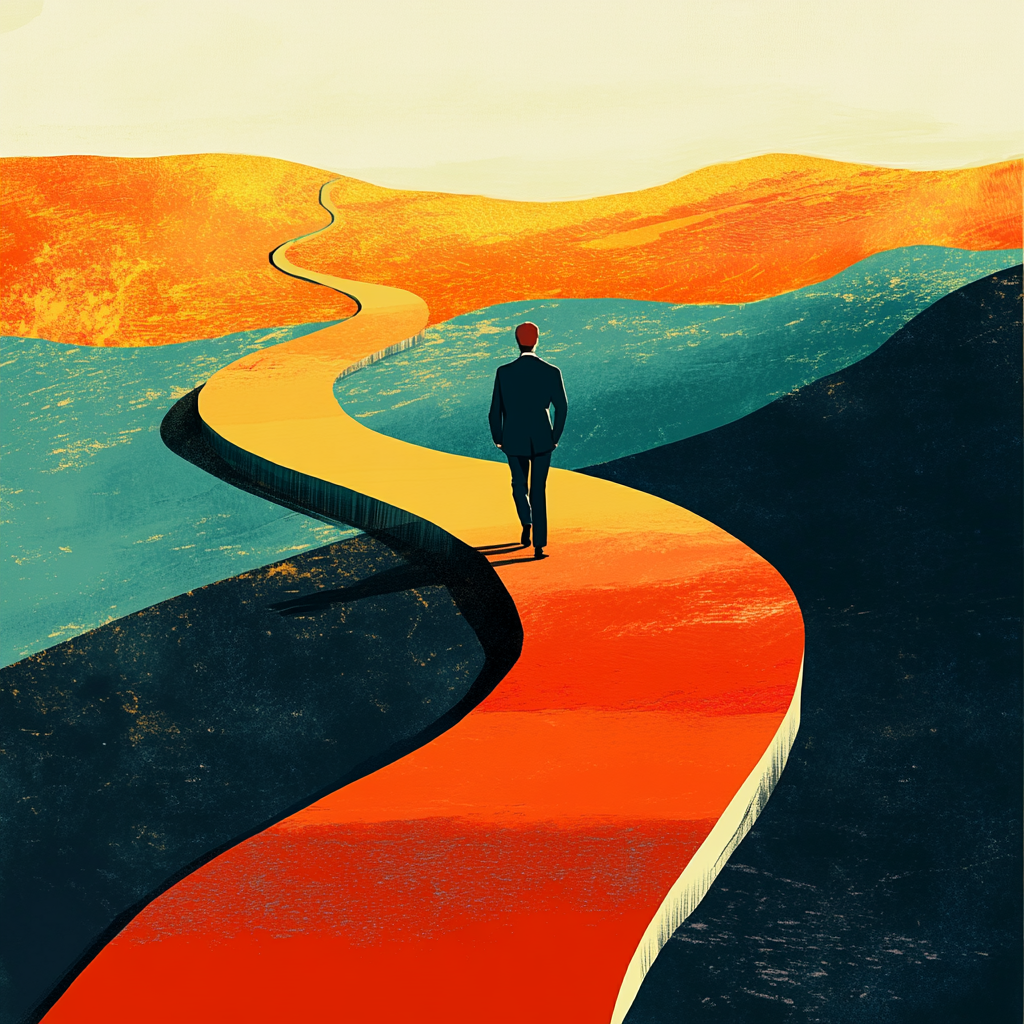
Let’s talk about the Path of Least Resistance, the philosophy of working smarter, not harder. This concept isn’t just a life hack—it’s a core principle observed in nature, business, and even your Netflix binge-watching habits. Think about it: rivers don’t argue with rocks; they just flow around them, taking the easiest route to their destination. Plants stretch towards the light without overthinking it, and even your cat somehow finds the warmest spot in the house without a second thought.
In short, the Path of Least Resistance is about minimizing struggle and finding the most efficient way to get where you want to go. It’s the idea that sometimes the best way to move forward is to stop trying to smash through obstacles and instead find a way to glide around them.
Why It’s Trending: The Rise of the “Soft Life” Movement
Recently, this idea has been getting a lot of buzz, especially in the form of the “soft life” movement. People are done glorifying the hustle culture that says if you’re not grinding 24/7, you’re failing. Instead, they’re embracing ease, valuing their mental health, and prioritizing joy over exhaustion. It’s like realizing you don’t need to run on a hamster wheel when you can simply take a leisurely stroll and still get where you need to go.
This isn’t about being lazy; it’s about being strategic with your time and energy. Imagine Elon Musk trying to launch a rocket by throwing it into the sky himself. Instead, he uses physics and technology to let the rocket do the work. The Path of Least Resistance is your personal rocket fuel—designed to make life easier, not harder.
The Science Behind It: Nature Knows Best
Nature has been using the Path of Least Resistance since day one. Rivers naturally follow the route that requires the least energy, flowing downhill in a meandering pattern. This principle is also seen in electrical circuits, where electricity always follows the path with the lowest resistance. It’s so deeply ingrained in physics that trying to go against it often results in wasted energy or failure.
According to the Second Law of Thermodynamics, systems naturally move towards a state of lower energy and greater entropy (disorder). The same principle applies to how we as humans operate; we’re naturally inclined to find the easiest way to accomplish a task. This isn’t a weakness—it’s efficiency in action.
When the Path of Least Resistance Works Like Magic
- Problem-Solving Like a Boss: Imagine you’re facing a difficult problem at work, like managing a team on a tight deadline. Instead of micromanaging every little detail (which is like trying to swim upstream in a hurricane), the Path of Least Resistance encourages you to delegate tasks according to your team’s strengths and let them flow. Empower your people, and let them do what they do best.
- Saving Time and Energy: Why reinvent the wheel when you can learn from others who’ve been there, done that? If you’re looking to start a business or develop a new skill, follow the templates, frameworks, or best practices that others have successfully used. The Path of Least Resistance is about working smart, not wasting hours figuring out what someone else has already cracked.
- Navigating Relationships: Whether it’s your partner or your coworker, stop trying to fix or change people to fit your expectations. Like water that flows around obstacles, focus on finding a middle ground that suits both parties. Trying to make someone change fundamentally is as productive as yelling at your Wi-Fi router when it’s slow.
- Self-Care and Mental Health: Sometimes the most resistant-free choice is knowing when to step back and rest. In today’s world, the glorification of burnout is out, and the Path of Least Resistance is in. Choosing to say “no” to extra commitments that don’t serve your well-being is a form of self-love. You’re not weak for resting; you’re smart for recharging.
Where It Doesn’t Work: When You Need to Step Up
Now, let’s get real: while the Path of Least Resistance is brilliant in many situations, there are times when taking the easy route isn’t the best choice. Here’s when you should set this principle aside and roll up your sleeves:
- Long-Term Goals Require Grit: If your dream is to write a novel, launch a startup, or run a marathon, the Path of Least Resistance might tempt you to give up when things get tough. In these cases, resistance is where growth happens. Building muscles, skills, or successful ventures requires pushing through discomfort and embracing the hard work.
- Crisis Management: When there’s an emergency, like a pandemic or a sudden shift in the economy, taking the easy way out often isn’t an option. This is when resilience and adaptability kick in. You have to face the resistance head-on, make tough decisions, and sometimes do things you’d rather avoid to ensure survival.
- Breaking Bad Habits: The path of least resistance can sometimes reinforce negative behaviors. Let’s be honest: it’s easier to reach for fast food than to cook a healthy meal. Breaking bad habits requires stepping out of comfort zones and creating new, often challenging routines. It’s in these moments of struggle that real transformation happens.
- Standing Up for What’s Right: If there’s one place where resistance is absolutely necessary, it’s in standing up against injustice, inequality, or wrongdoing. Going with the flow might be easier in the moment, but some situations require you to speak out, disrupt, and challenge the status quo. Think Greta Thunberg fighting climate change or those who demand social reforms—sometimes, resistance is the only path to progress.
Finding Balance: Know When to Flow and When to Fight
The trick to using the Path of Least Resistance wisely is knowing when to go with the flow and when to dig in your heels. It’s about picking your battles, not giving up every time something gets tough, but also not wasting your energy on struggles that lead nowhere.
Think of it like a dance—sometimes you need to let the rhythm take you where it will, and other times you lead the moves. The more you practice, the better you get at knowing when to resist and when to let go.
Current Pop Culture References and Banter
- Hustle Culture Backlash: In today’s pop culture, there’s a huge backlash against hustle culture, with people on TikTok and Instagram declaring that they’re not about that grind life anymore. Instead, they’re all about creating a work-life balance that doesn’t involve working 80 hours a week while pretending to enjoy it. The Path of Least Resistance fits right into this narrative—it’s the opposite of the “rise and grind” mentality, and more about the “rest and shine” mindset.
- Adulting Made Simple: Ever notice how adulting seems like a never-ending to-do list? From paying bills to meal-prepping, it feels like the path is always uphill. The Path of Least Resistance is like finding life hacks that simplify these chores, like using apps for grocery deliveries or automating your savings. It’s all about making “adulting” less of a chore and more of a life hack.
- The Internet Debate: Social media often feels like the wild west of opinions, where resistance to change or ideas leads to flame wars in comment sections. The Path of Least Resistance in these scenarios is to disengage and not let your mental peace be compromised by arguing with strangers on the internet. As the saying goes, “Don’t wrestle with pigs—you’ll both get dirty, and the pig likes it.”
The Sweet Spot: Living in the “East World” of Ease and Flow
Living in an “east world” means embracing ease, flow, and creativity, like that sense of calm you get when you stop obsessing over control and let things unfold naturally. It’s about realizing that not every battle needs to be fought, and sometimes the smartest strategy is to adapt, not attack. This mindset helps you find solutions that come with the least resistance while still allowing room for creativity and growth.
References
- “The Second Law of Thermodynamics” – Richard Feynman, “The Feynman Lectures on Physics” (1964).
- Nature and water flow analogy is supported by principles in hydrodynamics as outlined by Albert Einstein’s studies on fluid dynamics.
- Popular culture analysis sourced from #SoftLife movement trends on TikTok and analysis of anti-hustle culture discussions.
- General psychological principles about energy conservation and effort based on research from the American Psychological Association on stress and mental health management.
 Kaizeneers
Leave a comment