
In our hyper-connected, always-on world, the media holds an astonishing power: the power to shape how we see our leaders. The news we absorb, the stories we circulate, and the images we linger on all contribute to the public’s view of those at the helm. In this unforgiving glare, the media can magnify not just a leader’s triumphs, but also their stumbles, quirks, and flaws.
Media’s Responsibility: Upholding Decency and Respect in Leadership
The media, often revered as the fourth estate, carries a profound duty. This duty isn’t just to report what happens; it’s to foster a public conversation grounded in decency, integrity, and respect. The media has a unique platform to uplift leaders who embody these values and to hold accountable those who do not.
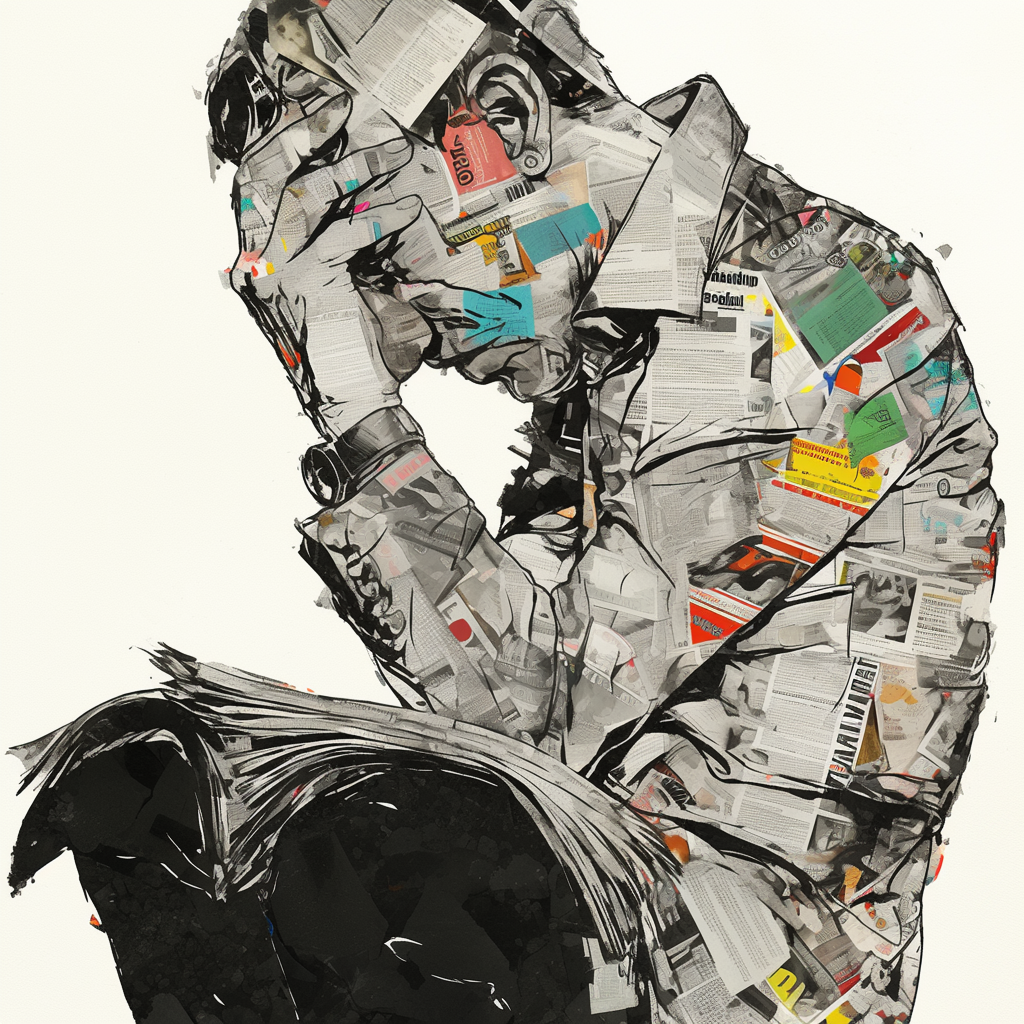
It’s high time for the media to move past the sensationalism and negativity that too often dominates the headlines. A relentless focus on scandal, gaffes, and political infighting erodes public trust, breeds cynicism, and discourages good people from stepping up to lead. Instead, the media should celebrate leaders who demonstrate decency, compassion, and a commitment to the common good.
Current Trends: A Warped Reality
The media landscape today is a double-edged sword. On one hand, it offers unprecedented access to information and empowers citizens to hold their leaders accountable. On the other, the chase for ratings and clicks often distorts reality, leaving us with a skewed and incomplete picture of leadership.
We’re living in an age where a single tweet or offhand comment can be blown out of proportion and dominate social media, eclipsing years of hard work and achievement. This creates a climate of fear and anxiety, pushing leaders to prioritize image management over meaningful action.
Furthermore, the media’s obsession with conflict and controversy has carved out a false dichotomy: “strong” leaders are those seen as decisive, even ruthless, while “weak” leaders are those who value collaboration and consensus. This narrow view ignores the profound power of empathy, integrity, and the ability to inspire trust.
Case Studies: When Image Clashes with Reality
History is replete with examples of leaders whose media-crafted image diverged sharply from their true selves. Take Richard Nixon, whose image as a shrewd, calculating politician was ultimately overshadowed by the Watergate scandal, revealing a much darker side to his leadership.
On the flip side, leaders like Mahatma Gandhi and Nelson Mandela, initially misrepresented or even vilified by the media, eventually triumphed in the public’s mind through their unwavering commitment to peace and reconciliation. Their steadfastness, despite media skepticism, secured their place in history.
Practical Advice: Leading with Integrity in the Media Age
In today’s media-saturated environment, leaders must navigate a tricky terrain where their every move is scrutinized. Here’s how to do so with integrity:
- Be Authentic: Ensure your words and actions reflect your true beliefs and values. Don’t succumb to the temptation of pandering to public opinion or putting on a false front.
- Prioritize Substance: Focus on real accomplishments and meaningful policy, rather than on superficial image-building exercises.
- Embrace Transparency: Be honest and open about your decisions, even when they’re unpopular.
- Engage with Civility: Respond to criticism with grace, avoiding the pitfall of personal attacks or inflammatory language.
- Use Social Media Wisely: Use these platforms to connect genuinely with the public, share your vision, and spread positive messages.
The Public’s Role: Demanding Better
At the end of the day, the media answers to us, the public. As consumers of news, we hold the power to demand a more balanced and principled approach to coverage. We can choose to support media outlets that value substance over sensationalism and hold accountable those who engage in unethical practices.
By engaging thoughtfully with the media, we can help steer the public conversation in a more enlightened direction. We can also use social media to amplify the voices of leaders who embody decency and integrity, encouraging others to follow their example.
The Media’s Role: Moving Beyond the Noise
As we navigate the intricate dynamics of our modern media ecosystem, it becomes clear that the media must rise above the fray. The 24-hour news cycle, fueled by the relentless drive for immediacy, often sacrifices depth for speed. This has resulted in a media landscape where the sensational and the scandalous overshadow the substantive and the significant. However, the media’s role is not to be a mere reflection of society’s baser instincts but rather to serve as a beacon that guides public discourse toward a more thoughtful and informed direction.
Consider the ways in which media coverage can distort leadership. A minor misstep, taken out of context and magnified through the lens of a hyper-reactive news cycle, can obliterate years of dedicated service and thoughtful policymaking. Leaders, aware of this, may become overly cautious, prioritizing their public image over bold, necessary action. This results in a form of leadership that is reactive rather than proactive, where the fear of negative press stifles innovation and courage.
The Power of Narrative: Shaping Leadership Archetypes
Media doesn’t just report on leaders; it actively shapes the archetypes by which we understand leadership. These narratives often simplify complex individuals into one-dimensional characters: the hero, the villain, the outsider, the savior. While these archetypes make for compelling storytelling, they rarely capture the full spectrum of a leader’s character and intentions. The media’s tendency to cast leaders into these rigid roles can limit our understanding of what true leadership entails.
Take, for example, the narrative of the “strong” leader. Media often glorifies leaders who display assertiveness, decisiveness, and even aggression, equating these traits with strength. Yet, history has shown us that some of the most effective leaders—those who have brought about lasting change—were not those who ruled with an iron fist, but those who led with empathy, wisdom, and a deep sense of moral responsibility. Leaders like Franklin D. Roosevelt, who navigated the complexities of the Great Depression and World War II, understood that true strength lies not in domination, but in the ability to bring people together toward a common goal.
On the other side of the spectrum, leaders who prioritize collaboration and consensus are often dismissed as “weak.” This binary view fails to recognize the critical importance of diplomacy, negotiation, and the ability to build bridges between opposing sides. A leader like Angela Merkel, who governed Germany with a steady hand for over a decade, demonstrated that quiet, measured leadership can be just as powerful—if not more so—than the bombastic, attention-grabbing approach that the media so often lauds.
The Erosion of Trust: Media’s Influence on Public Perception
The erosion of public trust in leadership is closely tied to the media’s approach to covering those in power. When the media focuses disproportionately on scandals and conflicts, it fosters a culture of cynicism and distrust. The public begins to see all leaders as fundamentally flawed, leading to a widespread disillusionment with the very concept of leadership.
This cynicism is dangerous because it creates a feedback loop: as public trust in leadership wanes, the media doubles down on negative coverage, which in turn further erodes trust. This cycle can only be broken if the media makes a concerted effort to provide a more balanced and nuanced portrayal of leaders—one that acknowledges their imperfections while also highlighting their successes and the complexities of the challenges they face.
Furthermore, this erosion of trust can deter capable individuals from pursuing leadership roles. Who would want to step into the public arena when the reward for doing so is relentless scrutiny, personal attacks, and the constant threat of being reduced to a caricature by the media? If we want to attract the best and brightest to leadership, we need a media landscape that encourages rather than discourages, that uplifts rather than tears down.
A Call to Action: Media, Leaders, and the Public
If the media is to fulfill its role as the fourth estate, it must embrace a higher standard of journalism—one that prioritizes truth over titillation, context over clicks, and substance over sensationalism. But the responsibility doesn’t rest with the media alone. Leaders, too, must rise to the occasion, understanding that their role is not just to lead, but to lead with integrity, transparency, and a genuine commitment to the public good.
Leaders must resist the temptation to manipulate the media for their own ends, to use it as a tool for propaganda or to deflect criticism. Instead, they should engage with the media constructively, using it as a platform to communicate their vision, to explain their decisions, and to foster a meaningful dialogue with the public.
Meanwhile, the public has a crucial role to play as well. As consumers of news, we must be discerning, seeking out credible sources and rejecting the lure of sensationalism. We must hold the media accountable, demanding that it lives up to its responsibility to inform, educate, and elevate the public discourse. At the same time, we must also hold our leaders accountable, insisting on transparency, integrity, and a commitment to the common good.
Looking Ahead: A Vision for a New Media Paradigm
As we look to the future, it’s clear that the relationship between media and leadership will continue to evolve. The rise of social media, the proliferation of alternative news sources, and the increasing polarization of the public are all forces that will shape this evolution. But amidst these changes, the core principles of decency, integrity, and respect must remain steadfast.
Imagine a media landscape where the focus is on solutions rather than scandals, where leaders are judged not by their ability to generate headlines but by their ability to solve the pressing issues of our time. Imagine a world where public discourse is characterized by thoughtful debate rather than shouting matches, where leaders are held accountable for their actions, but also given the space to grow, learn, and improve.
This vision is not an impossible dream. It is within our reach, but it requires a collective effort from all of us—the media, leaders, and the public. By committing to a higher standard of journalism, leadership, and civic engagement, we can create a world where decency, integrity, and respect are not just ideals, but the guiding principles of our society.
In conclusion, the media’s role in shaping leadership perception is both a tremendous power and a profound responsibility. By fostering a culture of decency and integrity, the media can help to elevate the quality of leadership, restore public trust, and ultimately, contribute to a more just and equitable world. As citizens, it is our duty to demand this of our media, our leaders, and ourselves.
Conclusion: A Vision for a More Cultured Society
In a world filled with division and discord, the need for decent, principled leadership has never been greater. The media has a crucial role to play in shaping how the public perceives leadership, and in fostering a more cultured, compassionate society. By prioritizing integrity, compassion, and respect, the media can empower leaders who embody these values and inspire a new generation to strive for a better future.
As citizens, we must demand more from both our media and our leaders. We must reject the false narratives that pit strength against empathy and recognize that true leadership lies in the ability to unite, inspire, and uplift. By embracing a vision of leadership rooted in decency and integrity, we can help build a world that is not only more cultured and appealing, but also more just and equitable for all.
 Kaizeneers
Leave a comment